
Living with NTM: A Patient’s Story of Diagnosis, Support, and Hope

 Hosted by Lesley Pink
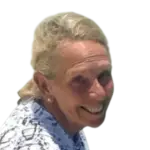
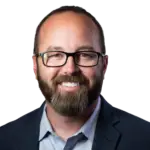
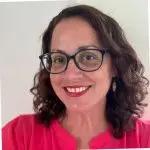
Host Lesley Pink talks with Laura Spensley (NTM Patient and Advocate), Amy Leitman (president of NTM Info and Research (NTMir), and Jessie Heaton (Vice President of Specialty and Infusion at VytlOne) about Laura’s journey as a NTM patient, resources available for patients, and treatment process and goals.
What you'll learn
- Why NTM is so often missed, and what Laura wishes primary care doctors and radiologists knew.
- How NTMIR grew from a homemade pamphlet into a support network with 50 or more groups.
- What proactive specialty pharmacy support looks like during long, complex treatment.
- Laura’s advice for anyone who has just been diagnosed.
Transcript
Lesley
Hello and welcome to The Strategic Dose: Driving Your Pharmacy Mission. I’m Lesley Pink, your host. Today we’ll be talking about nontuberculous mycobacteria disease, also known as NTM disease, and how it is treated. Nontuberculous mycobacteria are naturally occurring environmental pathogens that affect tens of thousands of Americans every year.
We’ll be talking with Amy Leitman, the president of NTM Info and Research, an advocacy group for people with NTM disease; Laura Spensley, a woman who has the condition; and Jessie Heaton, Vice President of Specialty and Infusion at VytlOne. Welcome to the podcast, Amy, Laura, and Jessie.
Laura
Thank you.
Amy
Thank you.
Jessie
Thank you.
Lesley
For listeners who’ve never heard of NTM disease, can you briefly explain what it is and how it affects the body?
Amy
Sure, I can jump in here. NTM, nontuberculous mycobacteria, are environmental pathogens. They’re found in soil, they’re found in water, they’re found in our potable water supply. They’re pretty hardy bugs, so they survive typical water treatments. Most of us go about our daily lives and we’re not bothered by them, but sometimes when somebody has an underlying condition that makes them more vulnerable, they can get an infection from it.
Most of the infections occur in the lungs. You can get infections in other parts of the body, like skin or soft tissue, but most occur within the lungs. These are really tough bugs to treat. They require a cocktail of antibiotics, usually for 12 months or longer.
The “nontuberculous” part indicates where they come from. They’re in the same family as other mycobacteria that people are more familiar with, including Mycobacterium tuberculosis, which causes TB, and Mycobacterium leprae, which causes leprosy. Those two are communicable. The other NTMs, the nontuberculous ones, are not communicable, but you can still get an infection from them. So that’s what NTMs are.
Lesley
Thanks, Amy. Laura, you just heard how NTM is explained clinically. Can you walk us through what your path to diagnosis looked like? And before your diagnosis, had you ever heard of NTM disease?
Laura
I had never heard of NTM. I had heard of a similar disease, bronchiectasis, which many NTM patients also have. Bronchiectasis causes widening in the lungs, and the cilia in our lungs don’t work as well to sweep out the microbes that come in, so we frequently get NTM disease.
When Amy said it’s treated with a cocktail, I’ll say it’s a cocktail I never wanted, but I am so thankful to have received it because it literally felt like it saved my life. I had chronic bronchitis throughout my life and was never given a chest CT or a referral to a pulmonologist. So I feel like if it had been addressed earlier, when I was younger, maybe my lungs wouldn’t have been so damaged by the bronchiectasis and I would have been able to fight off the NTM. I hardly know anybody who was diagnosed with NTM strictly because they got a CT when it was needed. Many of us had another episode happen in our lives. I had hemoptysis, a bleeding from the lungs, while on vacation. I was perfectly fine when we left. It happened that night when we arrived. When I returned from the trip, I talked to my primary physician, and thankfully he was the one who referred me for a CT. But then I was misdiagnosed by the radiologist who read the CT.
The radiologist said, “You have pneumonia.” And I was sitting in the parking lot drinking my coffee, and I’m like, “No, I can’t have pneumonia. I don’t have a fever. I don’t have a cough. I feel perfectly fine.” Luckily I had a scheduled pulmonologist appointment, and the pulmonologist read the CT scan correctly. So I think there are a lot of hurdles we face as patients: not getting a CT quickly to diagnose it, and sometimes having it misread by radiologists who don’t see a lot of bronchiectasis and NTM.
It’s been a journey, but one I am thankful to be on, and I will be on it for the rest of my life. It’s been life-changing in so many good ways, too.
Lesley
And how has it affected your daily life?
Laura
Literally, I thought my life was ending when I got the diagnosis. But what I’ve realized over time is: don’t go down the Dr. Google pat, because it just incites all the fear you can imagine. Find a reliable, science-based research group to join, like NTMIR and their Connect group, which brings members together from all around the world and answers questions based on scientific research. So you get clear knowledge of how to help yourself and be a patient advocate. I think as patients, we don’t realize when we’re first diagnosed how much advocacy we have in our own treatment. The treatment works best when the patient, the medical team, and our drug therapies are all aligned, and we agree and are committed to our therapies.
It’s life-changing in the ways that it often requires, depending on your situation. In my situation, I had four nebulization treatments twice a day for three years. Then it requires the cleaning, care, and sterilization of all the equipment. But you find, not shortcuts, but ways to be efficient, get through your treatments, and then go on living your day. I tend to look at NTM and not be fearful. I know that I will have it forever, but I’m going to live my life every day as fully as I can, and I’m not going to let it stop me from doing things. I think I have that attitude because I’ve seen women in the NTMIR Connect group and at patient conferences who’ve had the disease for 30 years, and they’re in their 80s, still playing golf, still getting out there every day doing the things they love. We learn that from others who’ve been through the journey ahead of us.
Lesley
Was there a time when you felt unsupported, and how did you go about finding community or help?
Laura
Yes. At the very beginning, we were moving from Florida back to Indiana. I left the pulmonologist who had just told me the news, and I hadn’t yet found a new pulmonologist. Then COVID hit, and pulmonologists were through-the-roof busy. I had a pulmonologist in Michigan, and I kept getting Pseudomonas infections. I was on 21-day rounds of ciprofloxacin.
I think that was the time I felt the least supported, those five to six months. I just felt like he couldn’t hear me. I knew it wasn’t his fault; I know he was so overworked with COVID. But it wasn’t until I landed in the hospital for five days with IV treatments to prevent the Pseudomonas from growing that it was recommended I go on inhaled tobramycin.
When I got home, he said, “I don’t think you need that. That’s expensive.” And I’m like, whoa. When an infectious disease doctor tells me that’s the medicine I need, that was a red flag for me. That was the time I felt so unsupported. But I found a care center. There are national care centers across the country, and the numbers are growing, thanks to the efforts of Amy and other groups to bring on standardized treatments of care.
I found National Jewish Health. It was a three- to four-month wait, but worth every minute because that’s where I found my superhero team. I visited quarterly for three years, and they brought me back to the land of the living, I say.
But it was a journey.
Lesley
Amy, her story probably sounds familiar. What do you hear most often from patients and families when they first reach out?
Amy
Yes, that’s a very familiar story: the lengthy journey to diagnosis, often being misdiagnosed, and then trying to find a provider who understands how to properly manage this disease because it is a management process. It’s not just treatment, it’s management. A lot of our patients come to us with that story, and we’re happy when they find us because we have vetted information that’s been reviewed by medical experts, and we have a very large community of support for them to come into. That’s really what they need at that point.
Lesley
What are the biggest barriers you see for patients in getting diagnosed or accessing the right treatment?
Amy
There are a number of barriers. First of all, I think the education part lags behind a little. Some doctors are still being taught in medical school that this is extremely rare or that this used to be a bigger problem. It’s not. It’s becoming a bigger and bigger problem. They’re not necessarily being taught to look for it earlier in their patients, which I think is a bigger problem as well. So that lag time to diagnosis is a barrier. Not having enough doctors who are well versed in managing this is another barrier.
You have a lot of areas with pockets of treating physicians who are very good at treating it, and then you have these treatment deserts where there’s nobody around for miles. That’s one of the things we’ve been trying to change with this clinical care outreach, where there are standardized treatment protocols and a care center within a few hundred miles that somebody can get to. And there’s this model of somebody going to a nationally recognized treatment center, getting their treatment protocol set up, and then having their local physician partner with that national center to manage their care locally. Those local doctors become better and more knowledgeable at treating these cases, and they can help other patients. That’s something we’ve seen happen as well, which is a good development.
Lesley
What led to the founding of your organization?
Amy
It was actually my father and my late stepmother who founded it. My late stepmom was a patient. She actually had NTM twice in her life. In her twenties she had MAC; she was treated and cleared. In her forties, she contracted another NTM species, abscessus, which is harder to treat. She was treated, and it was managed for many, many years. We say that, generally speaking, you don’t die from NTM, you die with NTM, and that was really the case. She ended up at National Jewish and met a lot of other patients who were like her. They said, “There’s no information. Where do we get more information?” I think that’s when my dad and my stepmom decided to step up, and they created this little information pamphlet. When it started, it was Xeroxed on a copy machine. Then they created a website from it and started designing and printing the pamphlet. Then they asked what else was needed, and people said, “We need more research.” So they started this organization, and we fund small starter research projects that answer some basic questions people have and point the direction for further research.
We’ve developed a lot of patient education and support now. We had two pamphlets. We just published a bronchiectasis pamphlet, and we’re now publishing several more on other topics patients need help with: emotional well-being, one for caregivers, nutrition. All of those are coming down the pike, and that information gets added to our website. We also have this really great support group network. We have 50 or more support groups now. We have affinity groups for patients who are under 50, a men’s group, and a group en español. We have all these great regional groups and a bunch of international groups as well. I think that’s really the backbone of our programming: this extensive support group network where patients can talk to others who are like them, find support, and talk to people who are going through the same thing. A lot of times they get diagnosed and they don’t know anybody else who’s had this.
They don’t know how to pronounce it. They’re just learning about it. It is hard to pronounce. You can’t pronounce it, you can’t spell it, but you’ve got it, and now you have to figure out how to live with it and deal with it.
Lesley
How has awareness of NTM disease changed over the last few years, and where do you think it still falls short?
Amy
I think we’re still seeing a bit of a lag in diagnosis, but we’ve actually moved that bar considerably since we started, and that’s good, and we have to continue moving that bar. A lot has changed in the landscape. We have an FDA-approved treatment, which we did not have before. There’s more research being done in this space and in the bronchiectasis space because bronchiectasis is one of the main underlying conditions. There’s just so much happening and so much accelerating now. It’s a very exciting time to see what’s going on. There are more companies interested in helping these patients, which is really what was needed in the first place. We just want to see that continue to move forward and even accelerate.
Lesley
Laura, does that match what you’ve been seeing? Do you feel like awareness has improved since you got diagnosed?
Laura
It does, and I have to give a lot of credit to Amy and her team at NTMIR. Each year in May, they hold a patient conference, and I’m lucky enough to attend. They bring the top doctors, the top researchers, the top scientists, and mental health professionals to us during this two-day conference so we can get the newest information, and it’s open to all patients. Also, this year at the conference, and I’m not sure if you’re familiar with HGTV, but Ty Pennington, one of the contractors, has, thanks to NTMIR and Amy and her team, started doing advertisements for NTM awareness. To see him on public TV talking about NTM on a Saturday during football, that’s huge. It brings awareness that there’s this thing out there, so people with a cough think, “Gosh, this is not going away. It’s consistent. Maybe I need to look into this more.” That type of awareness is so critical to getting an early diagnosis.
Amy
Let me just say, we were super excited to have Ty Pennington at our conference. He was just starting to work on an awareness campaign with a company, and I think this is the first time there’s been an awareness campaign for bronchiectasis. They were just launching the campaign when he came to our conference, so the timing was perfect. I think it helped a lot of patients to see that this is not something limited to your small group. It can happen to anybody. Ty’s mom has had bronchiectasis for a long time, so he was able to speak from the perspective of a family member and caregiver to one of these patients, which is really nice to hear as well. And now, like Laura said, you’re watching TV, and look, there’s a commercial about bronchiectasis. It’s everywhere. It makes me really happy to see it.
Laura
Every time I see it, I do a little cheer, like, “Yay!” How many more people are hearing it? It’s getting the word out. It’s huge.
Amy
Yes. And they talk about some of the symptoms in these commercials, too. There may be people out there who have not been diagnosed yet, and now they might hear that and say, “Okay, this is what’s been happening, and nobody’s put their finger on it yet. Maybe I can go back to my doctor, have a conversation, and get some testing done.” Hopefully that helps lead to diagnosis as well. That’s exactly what an awareness campaign should do.
Lesley
Jessie, now that we’ve heard about diagnosis and advocacy, let’s talk about what day-to-day treatment actually looks like. Can you explain what specialty support typically looks like for someone managing NTM disease?
Jessie
Yes, thanks for the question. First, Laura, I think your story and the way you express your perspective on managing your condition is really important for others to hear. You’re a great voice for those patients. It is a burden and a challenge, but you can still live a normal and happy life, and there are support groups like NTMIR with Amy and others out there. Just as much as Ty Pennington is out there sharing that message, your story is important for others to hear. So I really appreciate your time and your ability to spread that awareness because it’s a really positive outlook on a challenging situation.
Amy laid out the clinical picture really well earlier, and Laura, the journey. Just adding on a little bit: it is a chronic infection that affects the lungs, and because it’s not commonly seen, it’s not always the first thing that’s considered, so awareness is important. Diagnosis usually requires a referral to a specialist, which generally isn’t the patient’s first encounter. Like many rare diseases, the road to getting there can be long. Patients can spend months or even years without clear answers. That time matters. As Laura pointed out, symptoms like persistent cough and fatigue interfere with patients’ quality of life. Sometimes they pull out of social engagements, family events, and things they normally would enjoy. By the time they reach us, they’ve often been through a long and frustrating journey, and our job is to make that next step feel a little easier.
For a lot of our patients, they’re not familiar with a specialty pharmacy. This is a newer breakthrough treatment, and patients thankfully have a new medication, but that experience is new and unfamiliar, and it’s important for us to navigate it for them. After a long road to diagnosis, the last thing they need is more uncertainty. So the first thing we do is try to take the unknown out of it. We explain what to expect, who we are, how we fit into the process, and how the process is going to work. Up front, financial uncertainty can be a big part of that. We try to go well beyond insurance and authorizations. Our team works on financial assistance through manufacturer programs and foundation support, so cost isn’t a barrier to starting or staying on therapy. Every patient is aligned to a dedicated case manager who can be that one point of contact, navigate the journey for that patient based on their needs and whatever issues arise, and be an advocate for them along the way. And it doesn’t stop once they start with us. We proactively manage their therapy on an ongoing basis, trying to stay ahead of refills and identifying new barriers before they become a problem. We really believe patients shouldn’t chase us. We should be reaching out to them and supporting them along the journey.
Lesley
You mentioned, Jessie, that NTM treatment regimens are often long and complex. What role does close monitoring play in keeping patients on track?
Jessie
It’s really an extension of that proactive approach. Close monitoring means we’re engaged before something becomes a problem. That might be reaching out ahead of a refill, noticing a change in a patient’s situation, catching an insurance or authorization issue early, or hearing that something isn’t going smoothly at home with the treatment. The goal is to get ahead of concerns so they don’t turn into a disruption in the patient’s therapy. When a small issue is resolved early, the patient doesn’t feel it. And when something does need attention, our case managers connect with the patient and their care team right away. We’re really an early warning sign, or a bridge, to help mitigate those challenges before they become a problem.
Lesley
And what are some of the biggest challenges you see with treatment adherence, and how can pharmacy teams address those challenges?
Jessie
I think it’s an important question regarding this treatment. A lot of it comes down to how new and different the treatment experience can be. As I mentioned earlier, sometimes this is a patient’s first experience with a specialty pharmacy, much less a drug-and-device combination, and that’s unfamiliar. They need initial training on how to use the device, how to maintain and clean it, how to handle the medication properly, including its temperature sensitivity, and how all of that fits into their daily routine. Our approach is to make sure patients feel confident from day one, with hands-on education and support around the device and the medication, and practical help with how it fits into their daily schedule. As we mentioned earlier, they’re already sacrificing some of their daily schedule for the condition. If we’re introducing a new therapy that can be challenging and time-consuming, how do we best fit it into their schedule with recommendations on best practices we’ve seen? We make sure we’re there to help troubleshoot and take out any uncertainty because the last thing we want is to introduce another barrier into an already challenging situation.
What matters most is that support doesn’t end after initiation with us. We build relationships so patients feel comfortable reaching out with any questions, big or small, whether it’s about the device, the delivery, or something that just doesn’t feel right. When patients are confident and know their team is a call away, it helps them stay on track better.
Lesley
Laura, from your side of it, what has your treatment experience been like? Has the coordinated support made a difference?
Laura
I was just cheering Jessie on through everything he was saying because since I started working with this specialty pharmacy to get the new drug that’s available, Brinsupri™, they have been so proactive as a pharmacy. I travel a lot, and I can count on it regularly: 10 days out, I’ll get a phone call. “How are you doing? Did you want to talk to the pharmacist? Do you have any questions? Have you noticed any side effects?” They’re always looking for anything that may be going awry. Thankfully I haven’t used that service yet, but I’m always grateful it’s there. And they’re so accommodating about getting my medicine to the next place I’ll be. We travel frequently, and if I know 10 days out, I can speak to my VytlOne rep and they will have it on site when I land. So I know I never have to go without it. It’s been seamless over the last 12 or 13 months, and I am so grateful. To hear Jessie talk about the commitment behind it, I see it on the patient side. They live their promise to their patients.
Lesley
Jessie, do you see any innovations or changes in specialty pharmacy support that could benefit NTM patients in the coming years?
Jessie
I’m always excited about technology, but we want to make sure we meet patients where they’re at and that technology doesn’t replace the human touch. Our approach to technology is to use it for better data insights: spotting patterns like a delayed refill or an authorization that may stall based on previous patterns, and using that data to drive better engagement and insight into how we support our patients, rather than replacing the human touch. The insights we gain from technology improvements point our clinical teams to more targeted areas so they can support the patients who need it. We don’t want to be a barrier to patients who are already having good success, are compliant, and are doing well. Let’s focus on the ones who may need more support from us, and technology is allowing us to target those patients better.
The other piece is collaboration. Working closely with manufacturers and with advocacy groups like NTMIR and Amy’s team helps make sure we’re providing consistent education, resources, and support that are aligned. We understand from that perspective what patients actually need, and we use our technology and tools to get that information out to patients consistently. The more we work together, the better the experience is going to be for the patient.
Lesley
Amy, from an advocacy standpoint, what is the biggest change you are hoping to see next?
Amy
From an advocacy standpoint, goodness. I guess the biggest change I’m hoping to see is the development and issuance of more standardized care guidance, which I think is coming, though I think it’ll be a long time coming. The more guidance we have that says, “These are the things patients need,” the easier it’s going to be for patients to access those things: those medications, those services, those devices. Often guidance drives access. So I’m happy to see that unfolding.
I’d also like to see more work developing in the space for NTM treatments. It’s very difficult to develop anti-infectives. I’d like to see that pipeline get shored up and move forward because that benefits our patients tremendously.
Lesley
Laura, what advice would you give someone who just received the same diagnosis you did?
Laura
Hang in there. It’s going to get better. Come on over to a support group like NTMIR has. Look at their website. They have so many webinars, provided through their work and coordination with doctors who are at the top of their game. We have nutrition webinars, we have our inhalation therapy, our airway clearance therapy. There are so many little tidbits for you to pick up, tips and tricks to make life easier for you. And there’s support all along the way through your support groups. None of our journeys are ever the same. There are so many different types of NTM, but there are so many similarities. We can teach new members how to start tracking their symptoms if they think they might be having an exacerbation but aren’t sure, so they know when to call their doctor and catch that exacerbation early. If they’re feeling off for three or four days, noticing more sputum, fatigue increasing, night sweats, those are big triggers. When you’re new to it and overwhelmed by everything, you just don’t know those little tips and tricks. So joining something like NTMIR is so beneficial. It takes the burden off them, and they’re not alone.
Lesley
This is a question for all of you. If you could change one thing about how NTM disease is understood, diagnosed, or treated today, what would it be? Amy, I’ll let you go first.
Amy
I think I would try to change the understanding of its rarity. There’s too much of a perception that it’s still very rare. It’s not as rare as people think, and it’s increasing every year. I would want to change that perception because I think that would bring it more to the forefront of people’s minds.
Lesley
Laura?
Laura
My wish is for primary care doctors and radiologists to have better training and awareness. Like Amy said, awareness is key, and I think those are the two main areas that can catch the issue early.
Lesley
And finally, Jessie.
Jessie
Sure. I’d echo what Amy and Laura are both saying, but honestly, it’s Laura’s story: how do we get Laura’s perspective up front for these patients? It’s new, it’s challenging, but we want to make sure patients don’t immediately feel overwhelmed or concerned and that they know there are resources out there. When we broaden education for prescribers up front, the primary care doctors who may not know about the condition before referring patients on to specialists, and make sure those specialists and others have information on NTMIR and support groups, and people like Laura, to pre-educate these patients, they’ll know it is going to be a journey, but it doesn’t have to be completely negative. There are a lot of positives in it, and there are success stories that will help you along the way. So getting education out there earlier and continuing to push that would be my change.
Lesley
Well, Amy, Laura, and Jessie, thank you for joining us for the October edition of The Strategic Dose. Please join us in November for the next podcast, and remember that you can find us on Apple, Spotify, and YouTube.
Amy
Thank you.
Laura
Thank you so much. Appreciate you all.
Jessie
Thank you. Appreciate you.